Before the First Look at Conner Ives SS27
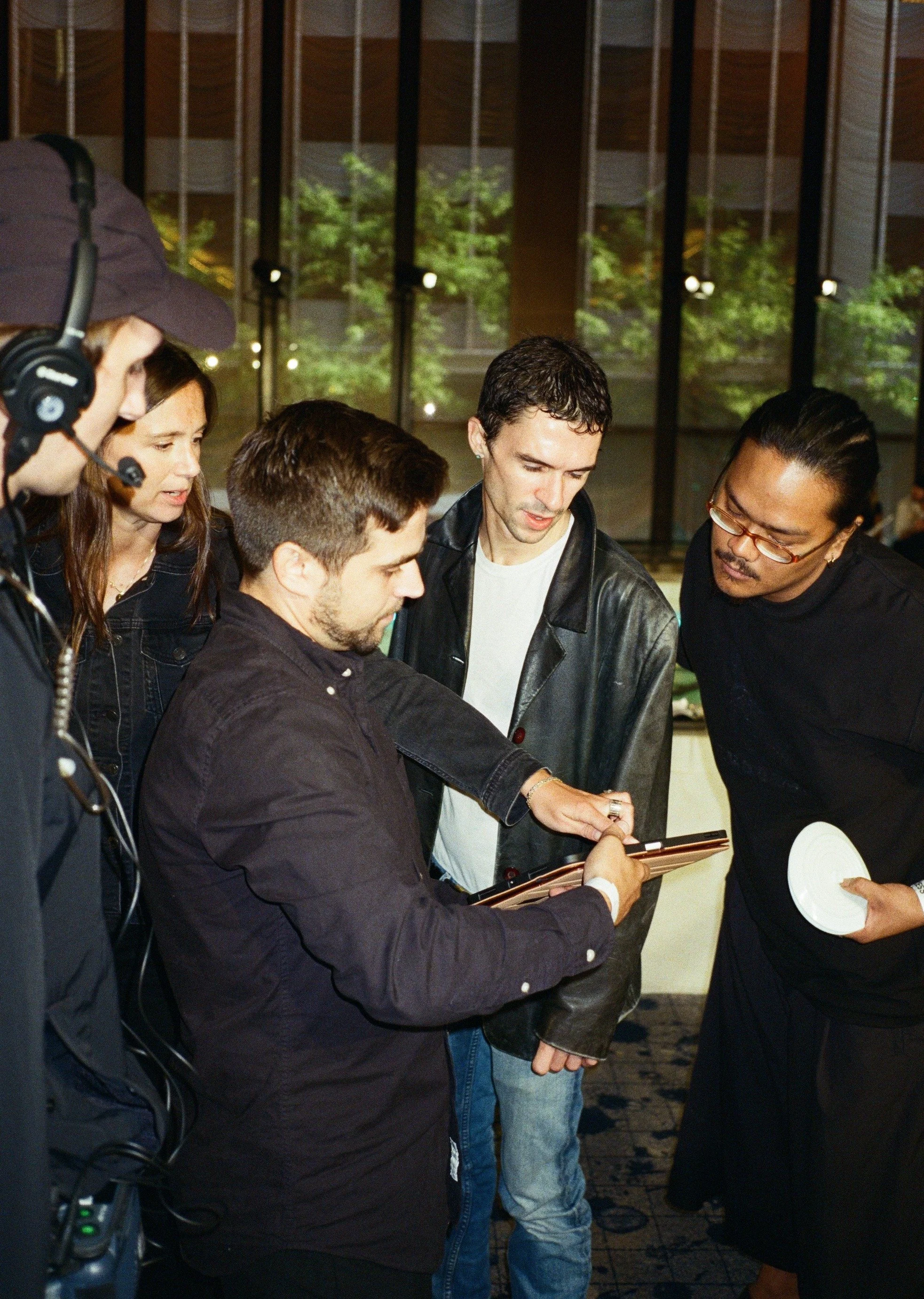
The final run-through, hours before the first look. Contax T3, Kodak 400.
Conner Ives brought his show home to New York this season, into the Pool Room at The Grill, and called it a homecoming. The runway was flamboyant: hand-painted trout, feathered chiffon, and a mint-green “Lady Liberty” finale gown. But my camera spent most of the day backstage, next to the hair and makeup chairs.
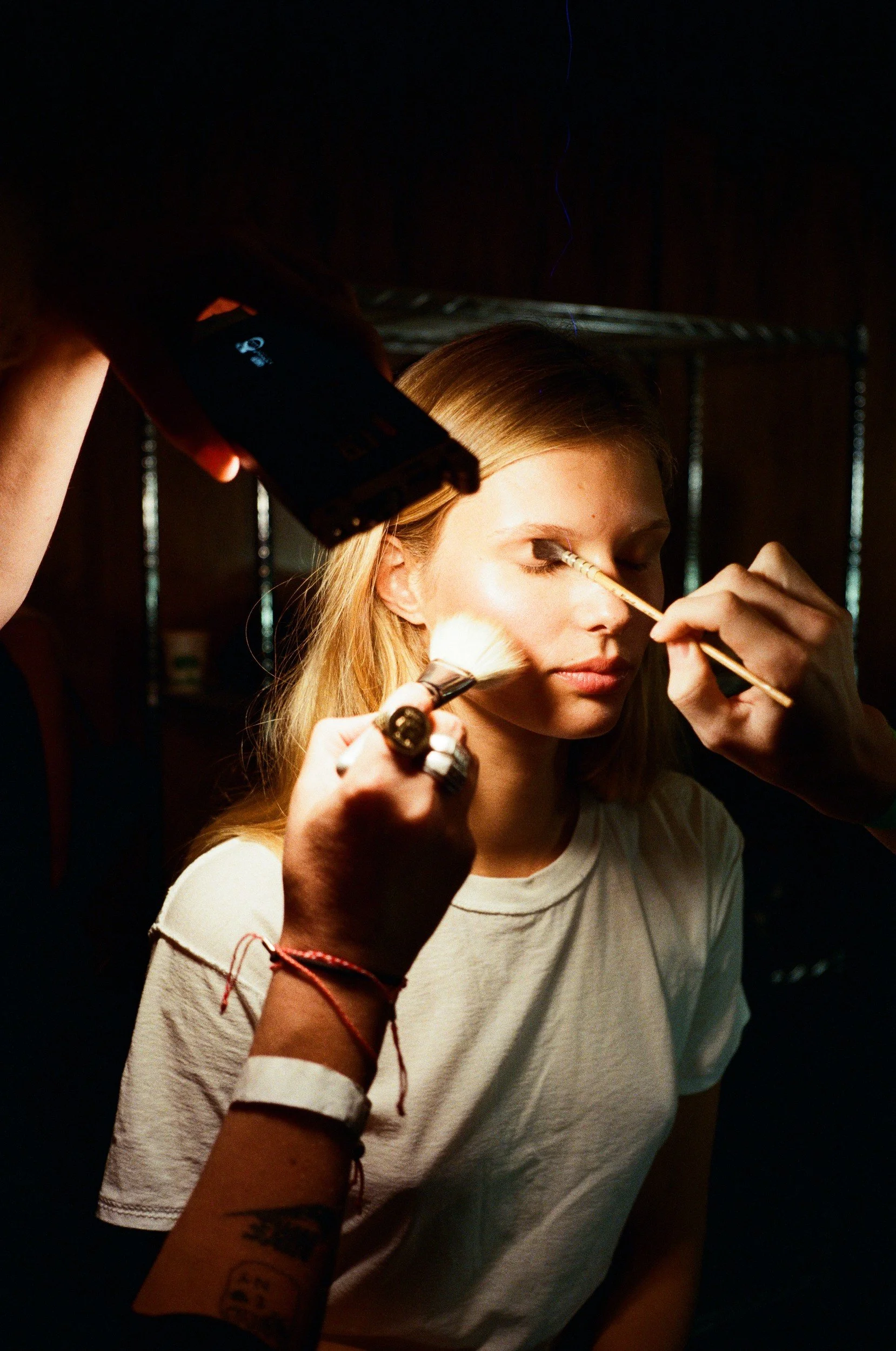
For the first shot, the room behind her was almost black. The only real light was a phone held up over her face so the artist could see the detail work. I let the background fall away and exposed for her skin, so the frame reads like a spotlight: two brushes working at once, rings on the artist's fingers, and everything else in shadow. The Kodak 400 held the highlights on her cheek without blowing them out.
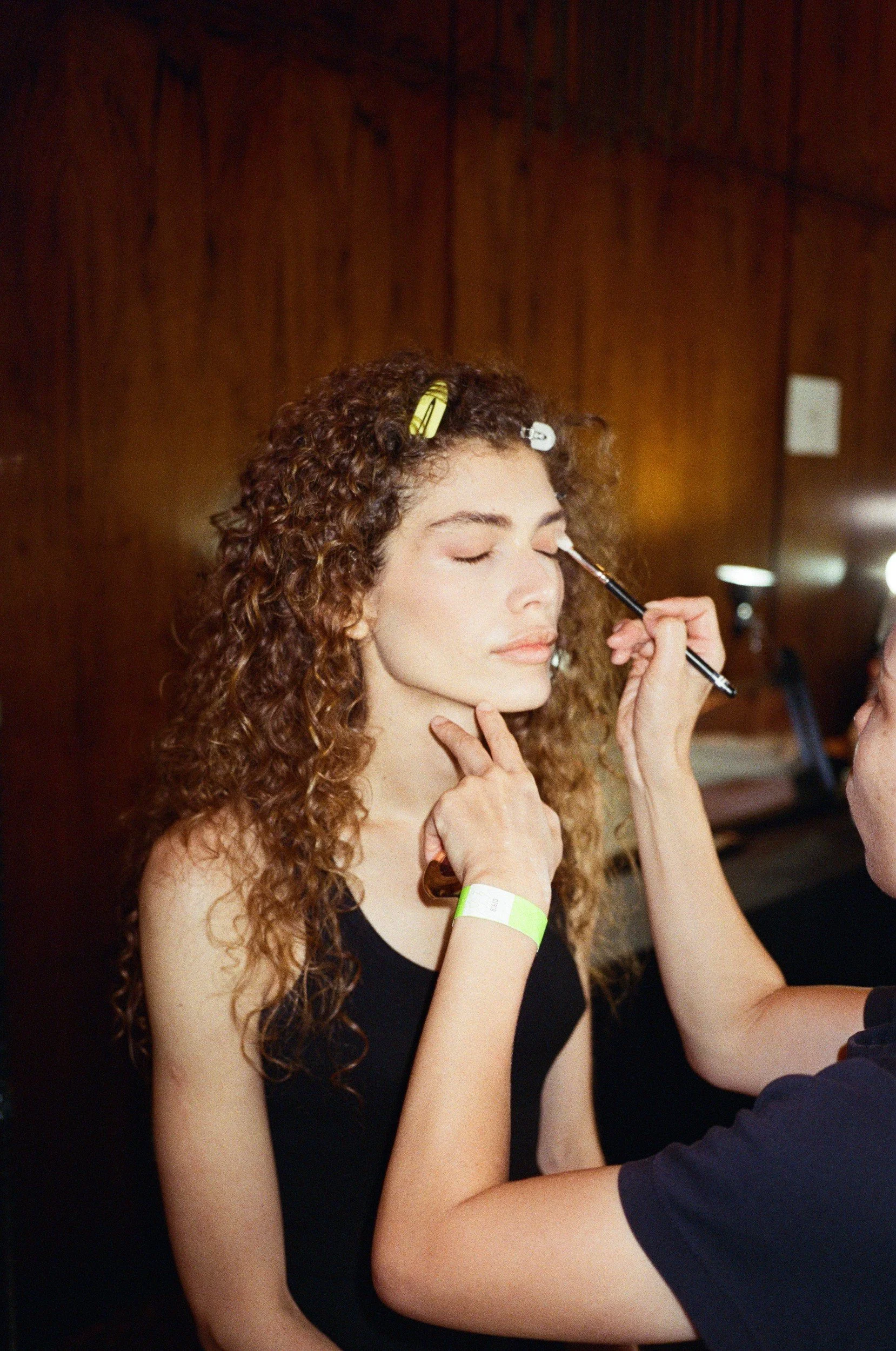
The second shot was the opposite. Her station sat against the wood paneling, lit by warm vanity bulbs that bounced off the walls and wrapped around her. The light was softer and more even, and the whole frame glows amber. Her eyes were closed for the liner, the artist's hand steadying her chin, and the gold clip in her curls caught the light. I stepped in close, stayed out of the artist's way, and let the warmth do the work.
Same backstage, two completely different lights. The job was just reading each one.
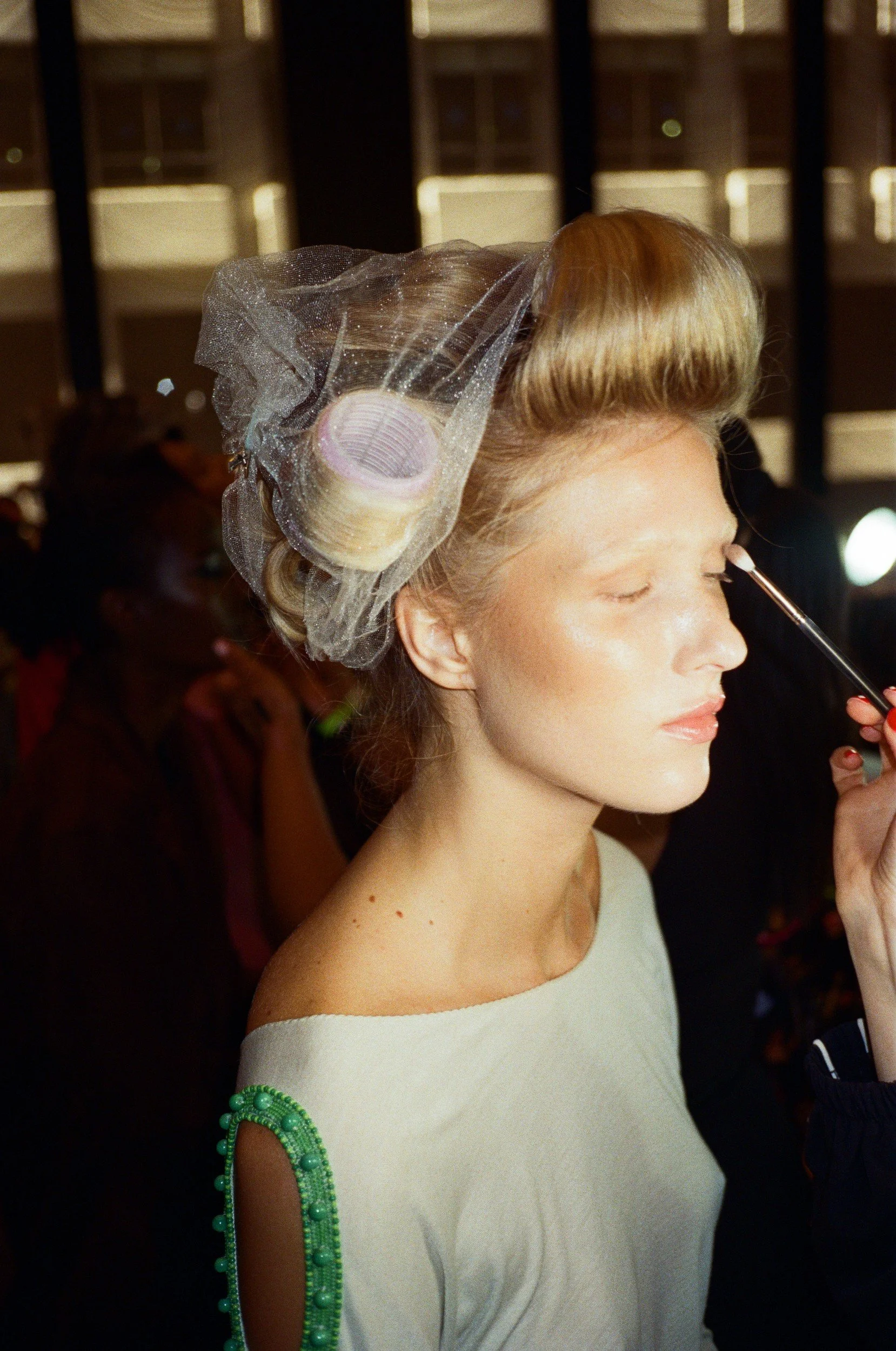
The last stretch is when everything overlaps. By now she was dressed, the green beading on her sleeve catching the light, but the rollers were still in, tucked under a sparkly net to keep the set. Up front, the sculpted wave was already finished. An artist leaned in for one last touch of shadow while the work lamp beside her did the lighting for me. Her eyes stayed closed through all of it. It’s the in-between I love most: not quite backstage, not quite runway.
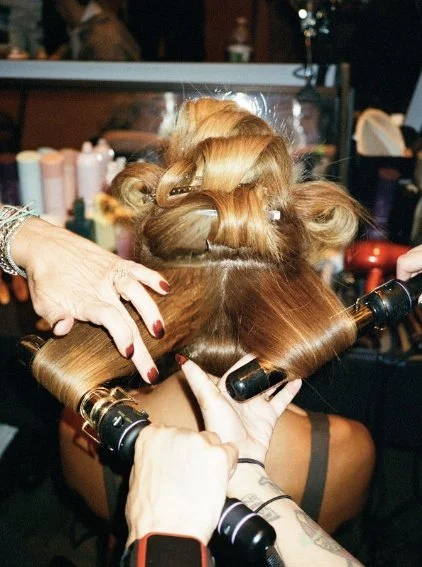
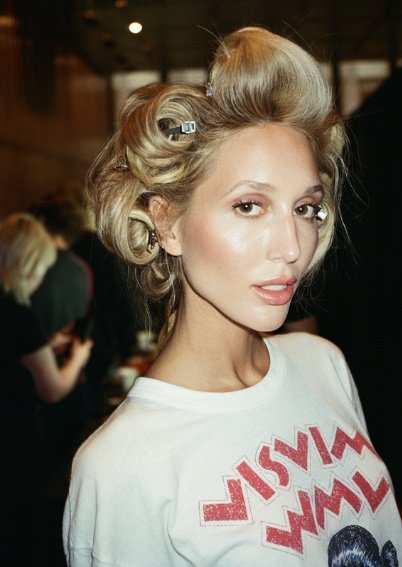
Two angles on the same chair: the work, then the person it's for.
The first is from behind. I stand at the back of the chair, where the stylists are working, and shoot straight down into the process. You don't see a face, just hands: red nails holding a section taut, two curling irons going at once, and curls already pinned and clipped on top. The shelf of products blurs behind them. From here the frame is about the craft, and how many people and tools it takes to build one head of hair.
The second is from the front, once the curls are set. I step around the chair, drop to her eye level, and wait for her to look up. The clips are still in, the pin curls frame her face, and her skin is dewy from the makeup chair. The crowd goes soft behind her. From behind, the frame shows the work. From the front, it shows the person it's being done for.
I always shoot both, because together they tell the whole story of the chair: the process first, then the payoff.
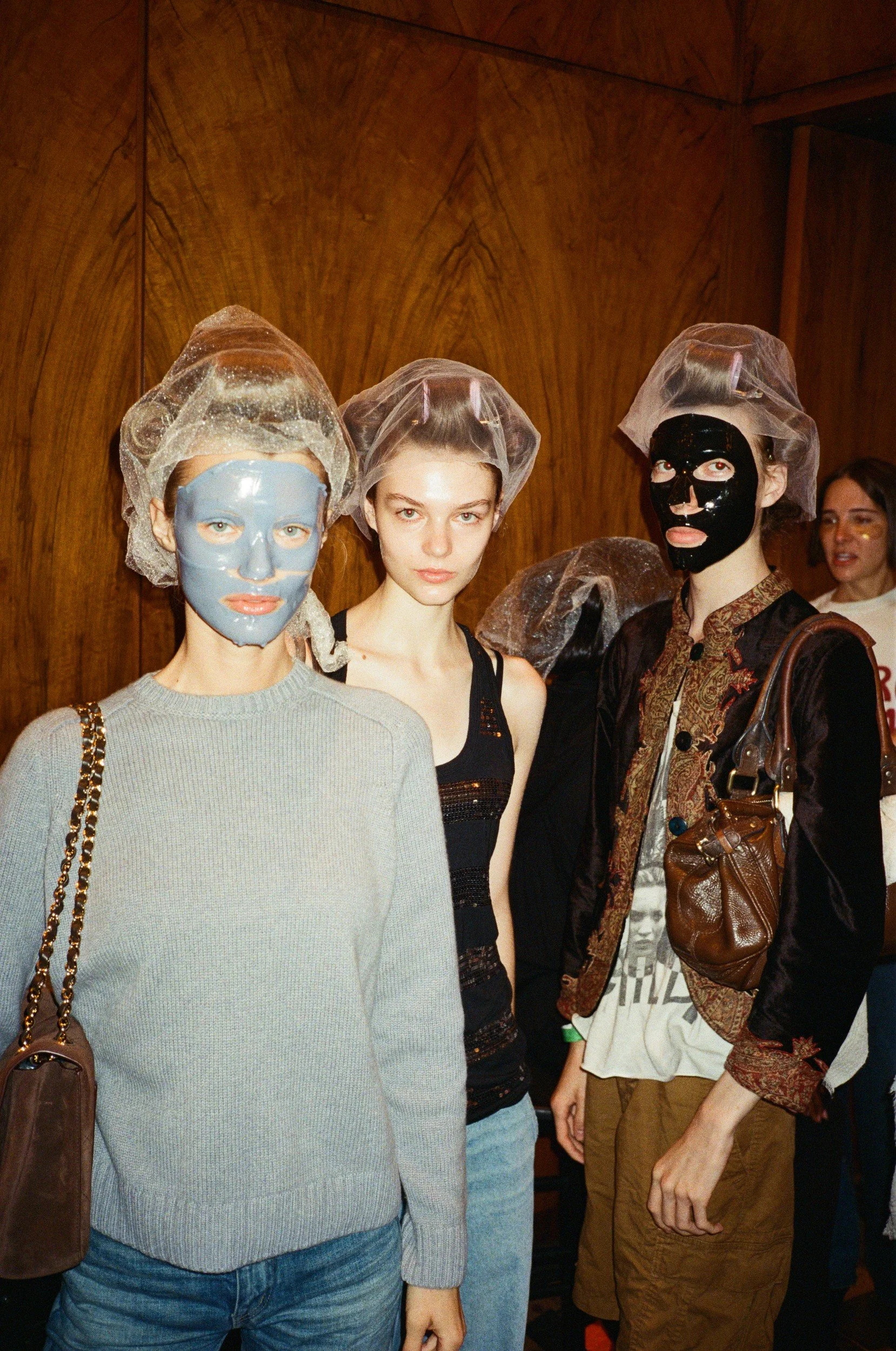
Rollers in, look on. The last touches before lineup.
The waiting was its own kind of backstage. Between hair and makeup, the cast stood around in sheet masks and hair nets, still in their own sweaters and jackets: one in pale blue, one bare-faced, one in glossy black. Nobody was posing. I stepped back just far enough to fit all three against the wood paneling and waited for them to turn toward me. It’s the frame I’d pick to sum up the day: everyone halfway to their runway look, and still completely themselves.
